0
- On sale!
- -€15.00



Panax ginseng C.A. Meyer is one of the most extensively documented medicinal plants in the world. The properties listed below are based on the EMA/HMPC monograph, on traditional uses documented for over 2,000 years in Asia, and on scientific studies available in the international literature.
Ginseng helps reduce physical and mental fatigue and supports energy and vitality in daily life. This use is one of the oldest and most widely documented for Panax ginseng, recognized in the Korean, Chinese, Japanese, and European pharmacopoeias. The EMA/HMPC monograph recognizes the established traditional use of red ginseng to support energy and vitality in cases of temporary fatigue.
Ginseng helps the body better adapt to periods of physical and mental stress. This adaptogenic property, documented in Asian ethnobotanical literature for centuries, is the subject of a growing body of scientific research on the effects of ginsenosides on the hypothalamic-pituitary-adrenal axis, which is involved in the stress response. This research provides a preliminary foundation, though definitive clinical conclusions have not yet been established at the European regulatory level.
Ginseng helps maintain cognitive performance and alertness. The available research on the effects of ginsenosides—particularly Rg1 and Rb1—on cognitive functions (working memory, concentration, reaction time) represents an active area of research, documented in several hundred international publications.
Ginseng contributes to the body’s natural defenses and supports the normal functioning of the immune system. The polysaccharides and ginsenosides in Panax ginseng are studied for their interaction with immune system cells in the available scientific literature.
Ginseng helps maintain normal blood sugar levels as part of a balanced diet and contributes to the maintenance of normal blood circulation. These two properties are the subject of claims currently under evaluation by the EFSA (IDs 3669, 3871, 3668) and are documented in the available scientific literature on Panax ginseng.
The Eurofins 2022 analysis of the Royal Asieco extract reveals the presence of the following ginsenosides: Rb1 (16.9 mg/g), Rg1 (3.95 mg/g), Rf (1.65 mg/g), Rb2 (7.75 mg/g), Rc (13.2 mg/g), Re (6.34 mg/g), Rd (3.92 mg/g). These compounds are studied for their role in vitality, physiological balance, and supporting bodily functions.
Formulations related to fatigue, energy, stress, natural defenses, blood sugar, and blood circulation are based on the EMA/HMPC monograph for Panax ginseng and on claims currently under evaluation by EFSA. They do not constitute authorized health claims within the meaning of Regulation (EC) No. 1924/2006 beyond recognized traditional use. Consult a healthcare professional if in doubt.
| Scientific name | Panax ginseng C.A. Meyer |
|---|---|
| Common names | Korean red ginseng, Asian ginseng, Korean ginseng |
| Botanical family | Araliaceae |
| Part used | Root, 6 years old, extracted and concentrated |
| Composition | 100% pure red ginseng (Panax ginseng) extract, free of additives and excipients |
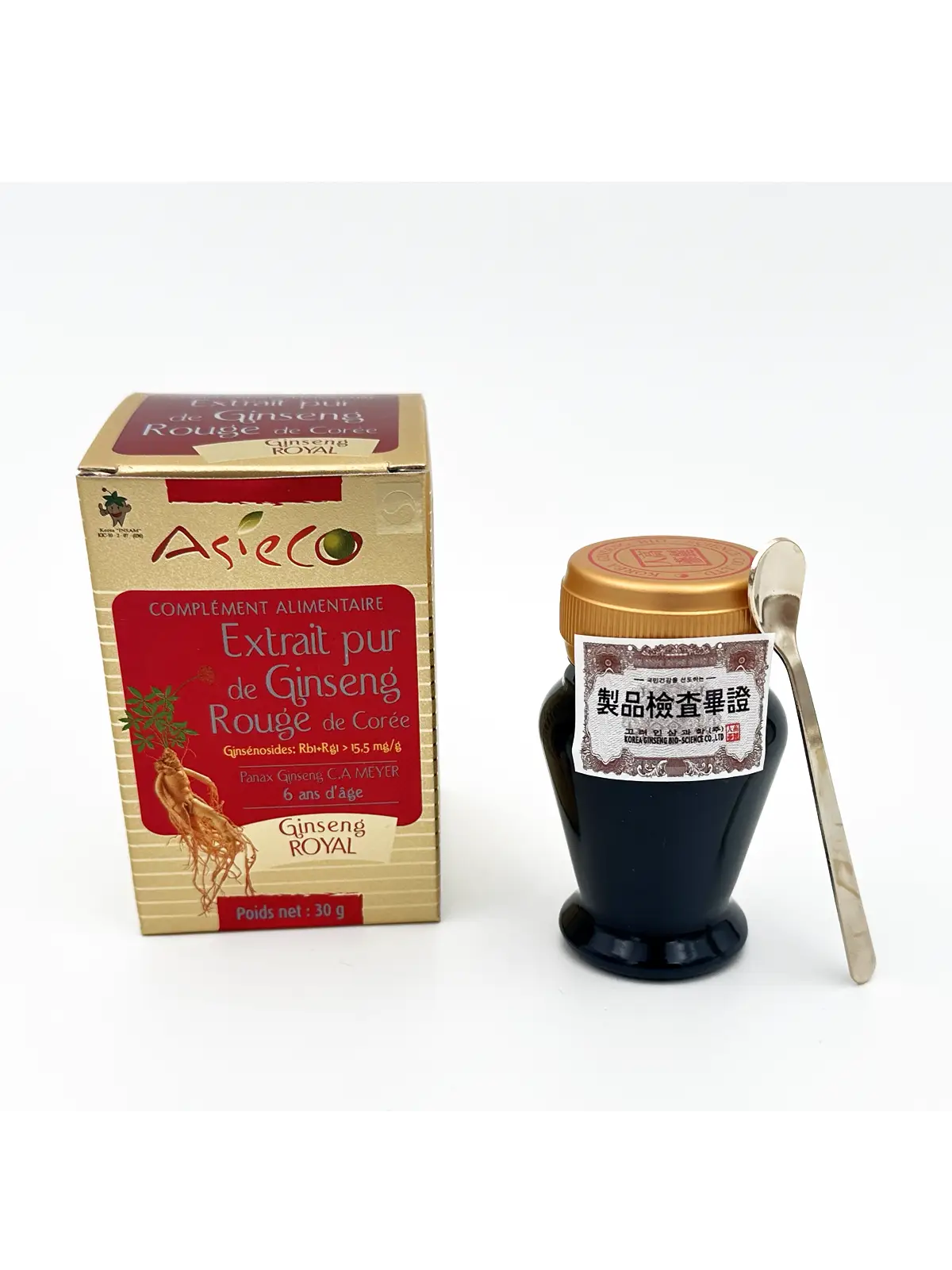
| Standardization | Ginsenosides Rg1+Rb1: minimum 15.5 mg/g (Royal quality), Eurofins test result 2022: 20.85 mg/g |
| Certification | GMP (Good Manufacturing Practice) |
| Analytical laboratory | Eurofins, France |
| Origin | South Korea |
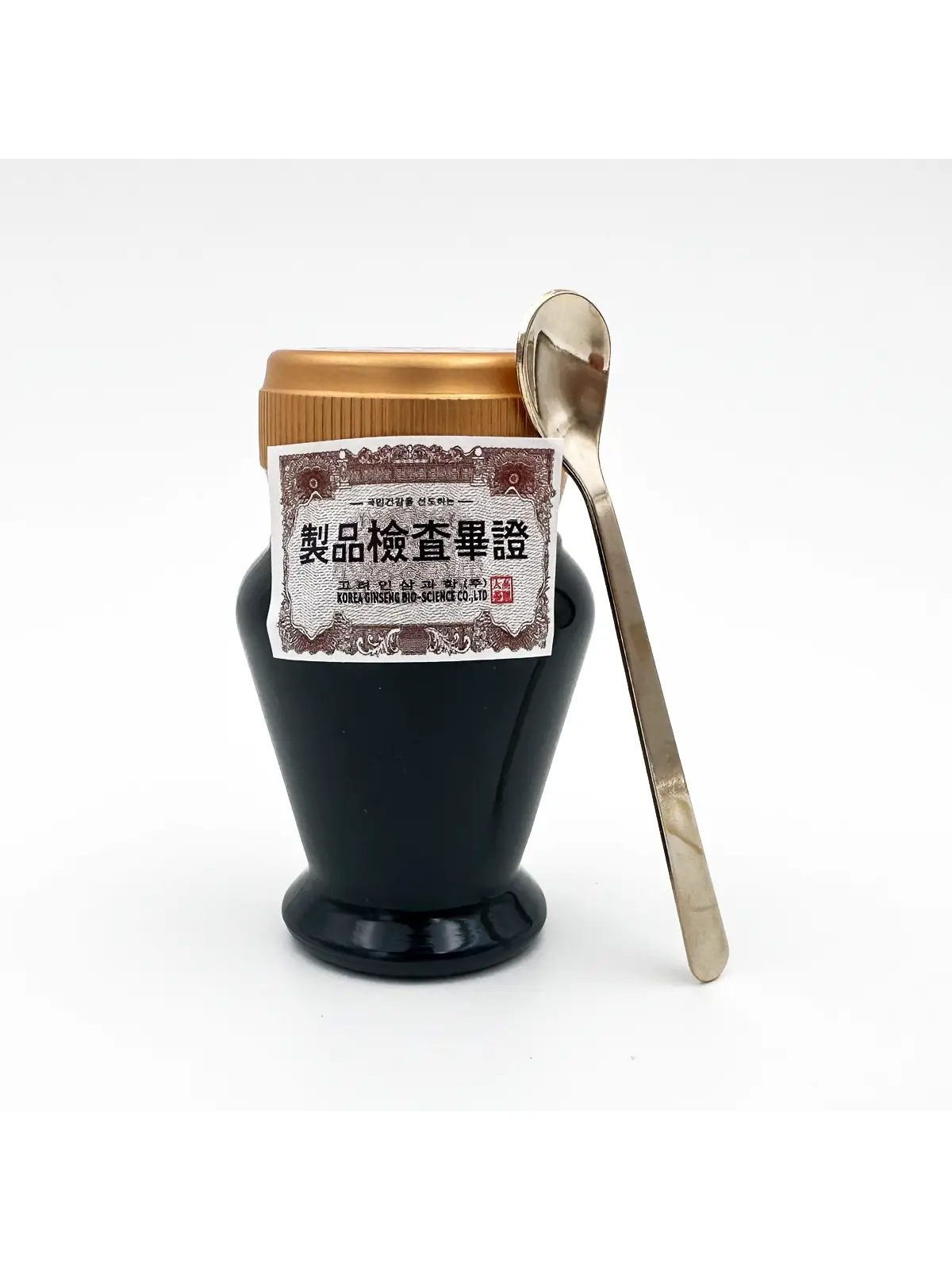
| Packaging | 30-gram bottle, measuring spoon included |
| Daily dose | 0.5 to 1 g per day (half to one measuring spoon) |
Korean red ginseng is derived from Panax ginseng C.A. Meyer, which undergoes a steaming process followed by drying after harvest. This heat treatment transforms certain ginsenosides and alters the root’s chemical profile, giving it its characteristic red color and enriching the formula with specific ginsenosides such as Rg3, which is absent in white ginseng. The root is harvested after 6 years of cultivation, a period considered optimal by the Korean Pharmacopoeia for the accumulation of active ginsenosides.
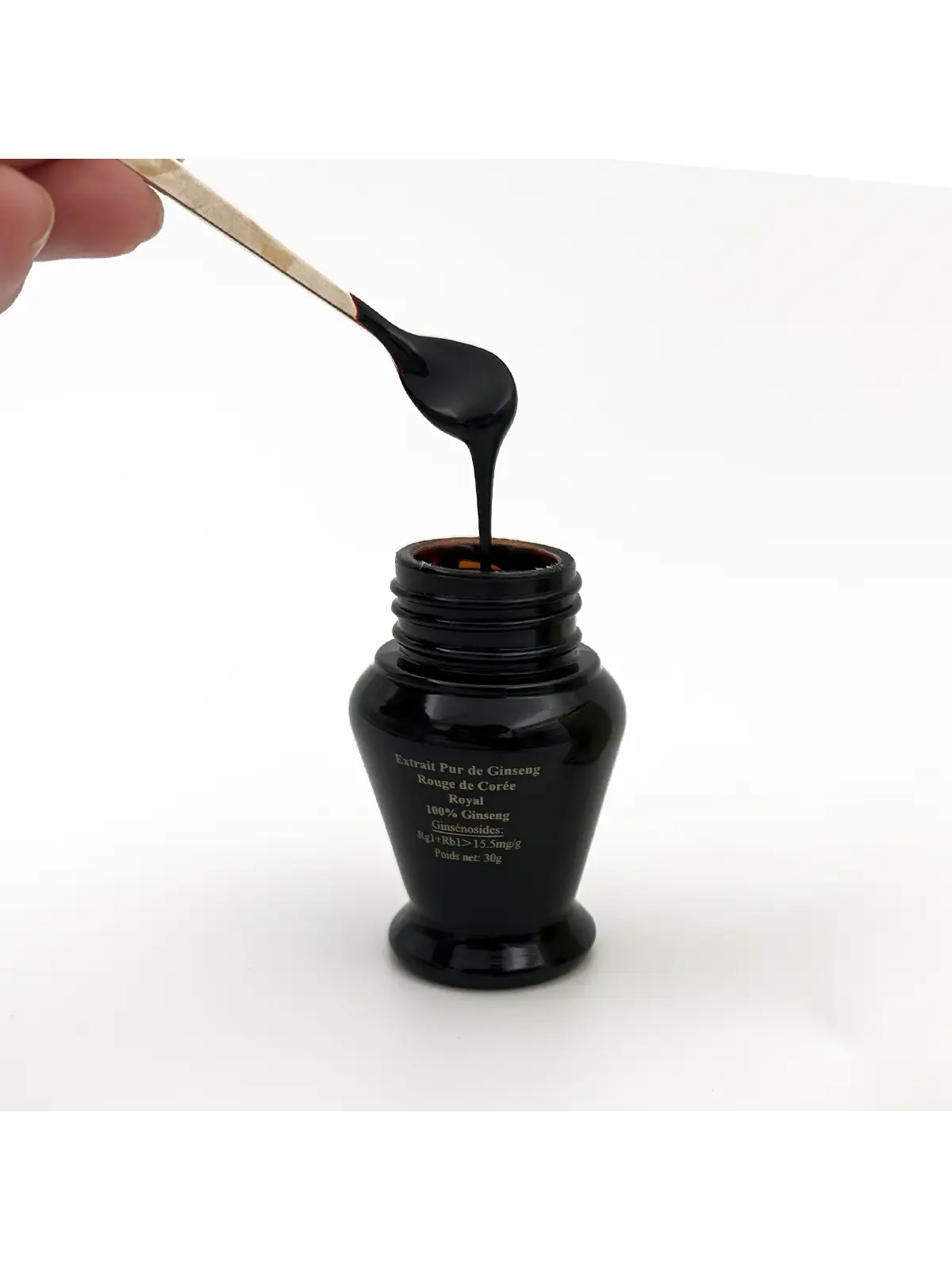
This extract is a pure concentrate free of additives, excipients, and preservatives. It has the texture of a dense, dark brown to black resin, with a characteristic bitter and earthy flavor. The included measuring spoon allows for precise and consistent dosing.
Ginseng contains about thirty ginsenosides, the sum of which constitutes what some manufacturers refer to as “saponin content.” In France, only Rb1 and Rg1 can be analytically tested by accredited laboratories. Rg3 and total saponins cannot be tested by French laboratories, making them unverifiable parameters. Asieco certifies only the Rb1 and Rg1 content, the only two objectively verifiable parameters.
Dietary supplement. Do not exceed the recommended daily dose. Not a substitute for a varied, balanced diet and a healthy lifestyle.
Take half a measuring spoon (about 0.5 g) to one measuring spoon (about 1 g) every morning on an empty stomach. The measuring spoon is included in the bottle. Two ways to take it:
Recommended duration: 2 consecutive months, followed by a break of at least 2 to 4 weeks. The 30-gram bottle contains approximately 30 to 60 daily doses, depending on the dosage chosen.
Preferably in the morning on an empty stomach, at least 30 minutes before breakfast. Avoid taking it in the evening if you are sensitive to the plant’s invigorating effects.
Store at room temperature, away from heat and direct light. Do not refrigerate. Close the bottle tightly after each use. Keep out of reach of children.
Not recommended for pregnant or breastfeeding women or children under 12 years of age. If you are currently taking diabetes medication, consult a healthcare professional due to a possible interaction with blood sugar levels documented in the literature. If you are taking anticoagulants (warfarin) or MAO inhibitors, consult a healthcare professional. Do not combine with other stimulants without considering the cumulative stimulating effect.