0


A Himalayan shilajit resin, with a minimum fulvic acid content of 65%, analyzed by Eurofins in France.
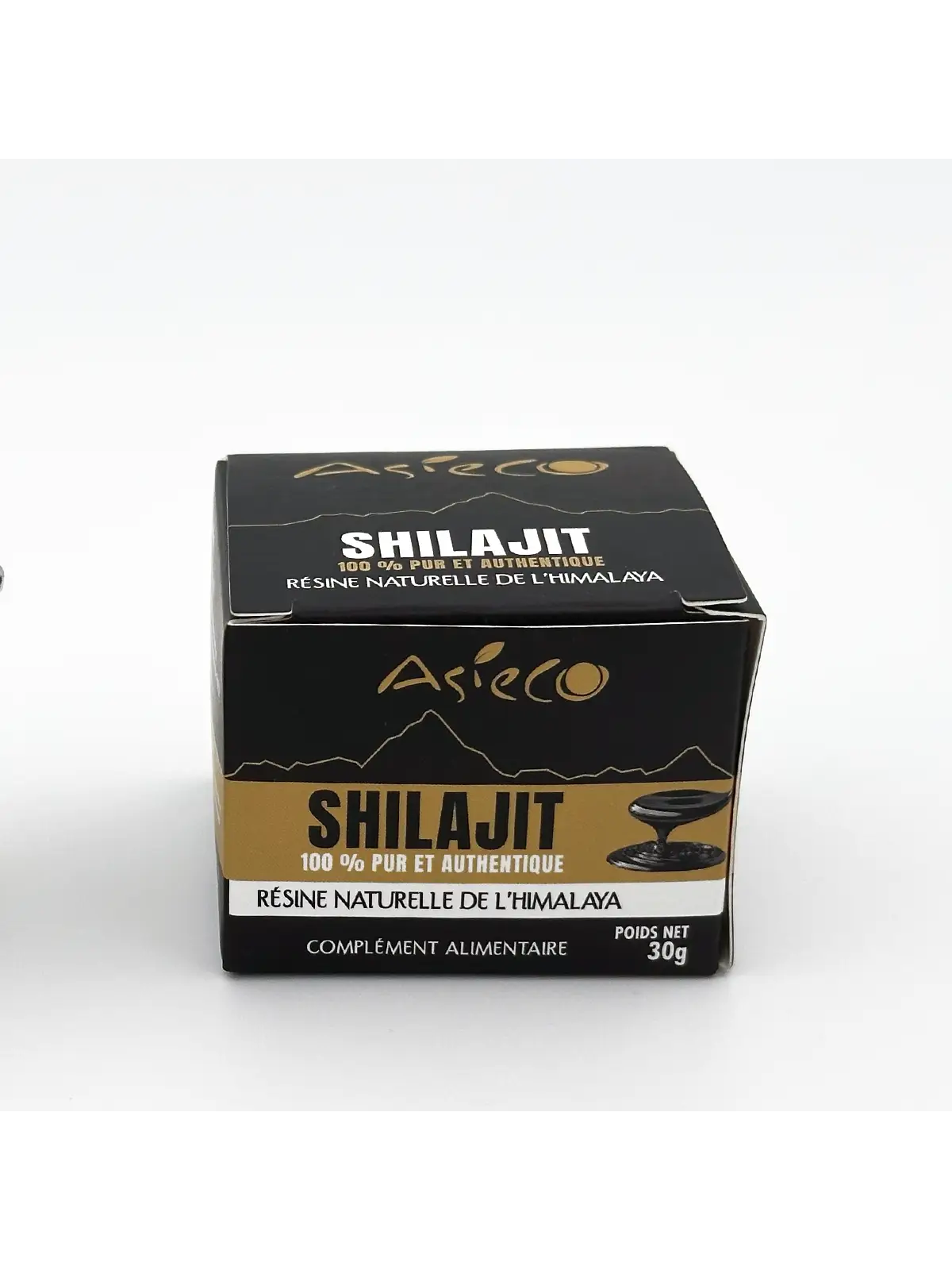
Shilajit is a natural substance formed by the slow decomposition of plant and mineral matter in high-altitude rock crevices. Harvested in the Gilgit-Baltistan region (Pakistani Himalayas) and purified at low temperatures. Guaranteed to contain at least 65% fulvic acid and is free of heavy metals.
Dietary supplement. Do not exceed the recommended daily dose. Not a substitute for a varied and balanced diet.
To date, shilajit does not have an EMA/HMPC monograph, and no health claims have been authorized by EFSA for this substance. The information below is based on documented traditional uses in Ayurvedic medicine and on data available in the scientific literature. No therapeutic claims are made.
Fulvic acid is the characteristic organic compound of shilajit and the primary marker of its quality. It is a low-molecular-weight humic acid derived from the decomposition of organic matter, found in the soils and waters of certain mountainous regions. In shilajit, its content can vary greatly depending on the source and purification process: from less than 10% in low-quality products to more than 60% in high-quality purified resins. The minimum content of 65%, guaranteed and verified by Eurofins in this product, places this shilajit among the highest concentrations available on the European market.
In addition to fulvic acid, shilajit contains humic acids with higher molecular weights, as well as a wide range of trace minerals naturally present in Himalayan rocks: iron, zinc, magnesium, copper, manganese, selenium, and more than 80 other minerals according to analyses available in the literature. These minerals are present in ionic form, bound to fulvic acids, a combination studied in the literature for its bioavailability properties.
Shilajit is mentioned in the Charaka Samhita and Sushruta Samhita, two of the principal foundational treatises of Ayurvedic medicine, written over 3,000 years ago. It is referred to there as shilajatu or silajit and classified among the so-called “rasayana” substances—an Ayurvedic category designating substances believed to promote longevity and cellular renewal. This status in the Ayurvedic pharmacopoeia is the source of modern scientific interest in this substance, with several hundred publications available in the international literature.
Unlike red ginseng or guarana, shilajit is not a stimulant and does not produce an immediately noticeable tonic effect. Its effects, if any, are long-term and cumulative, consistent with regular consumption over several weeks. This is why it is frequently combined with red ginseng in complex formulations, as the two substances have complementary modes of action and profiles of active compounds.
The information above is derived from scientific literature and documented Ayurvedic tradition. It does not constitute health claims as defined by Regulation (EC) No. 1924/2006 and is not intended to replace medical advice.
| Product Type | Natural organic mineral substance, resin |
|---|---|
| Composition | 100% pure Himalayan shilajit, containing at least 65% fulvic acid, humic acids, and essential minerals |
| Fulvic Acid Content | At least 65% (analyzed by Eurofins France) |
| Source | Gilgit-Baltistan, Pakistani Himalayas, high altitude |
| Purification | Traditional low-temperature methods, without chemical solvents |
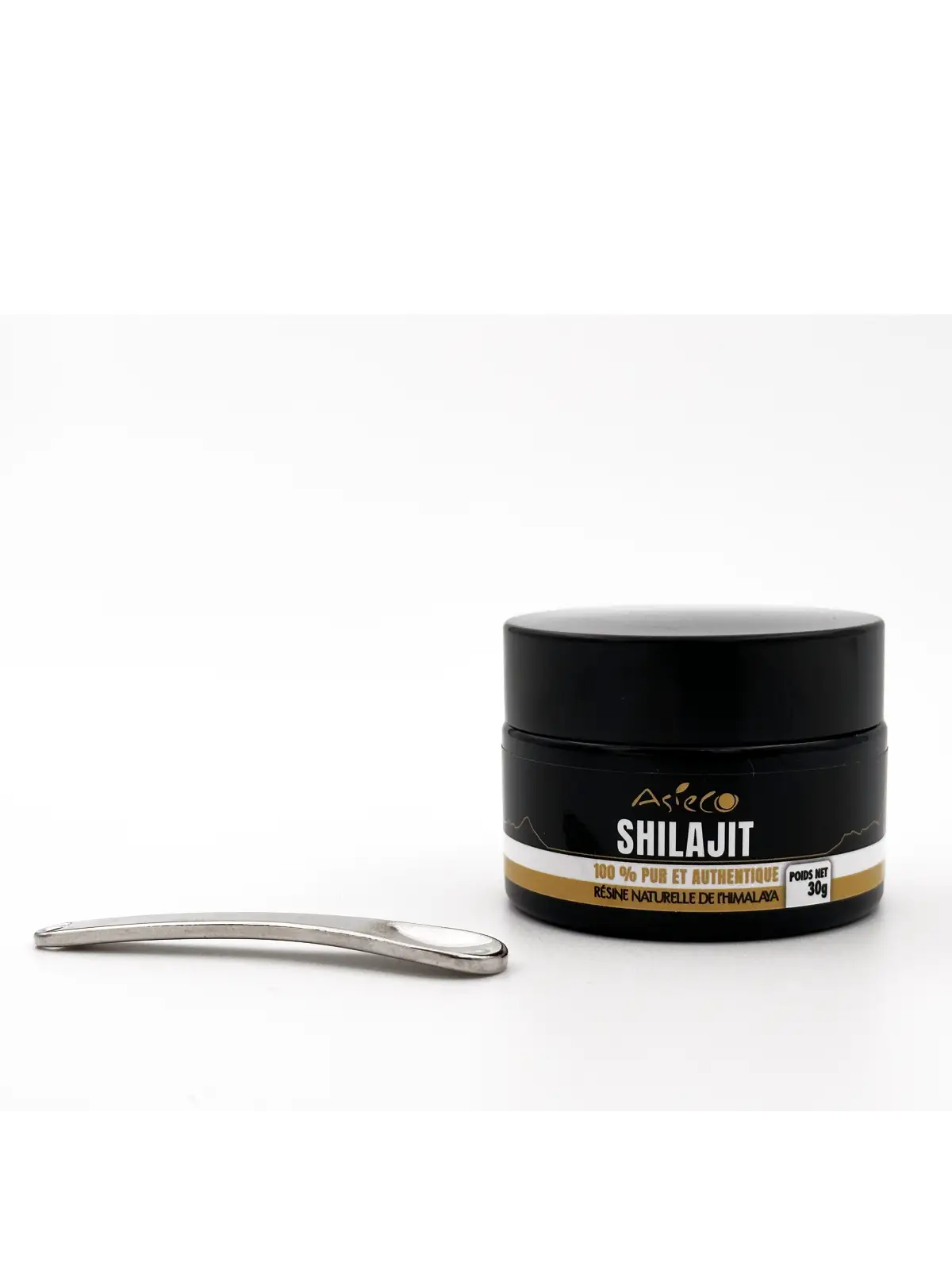
| Packaging | 30g or 50g glass jar; measuring spoon included |
| Daily dose | 0.5 to 1 g per day (half to one measuring spoon) |
| Analytical laboratory | Eurofins, France |
Shilajit is a substance radically different in nature from all other products in the Asieco line. It is neither a plant, nor a plant extract, nor a fungus: it is an organic mineral substance that has formed over millions of years through the slow decomposition of plant matter and microorganisms trapped in high-altitude rock fissures. Under the combined effect of rock pressure, extreme temperature fluctuations, and geological time, this organic matter gradually transforms into a dark, dense, and viscous resin that naturally oozes from rock faces in the summer when heat melts the glaciers.
The shilajit offered by Asieco is harvested in the Gilgit-Baltistan region, a mountainous province in northern Pakistan bordering Afghanistan and China, in the Himalayan mountain ranges reaching over 7,000 meters. It is one of the world’s leading regions for the quality of shilajit, with rock outcrops particularly rich in fossilized organic matter. The raw resin is then purified at low temperatures using traditional methods to concentrate the active compounds and remove mineral impurities without destroying the heat-sensitive organic compounds.
Its texture is that of a dense resin, black to very dark brown in color, slightly sticky, and soluble in hot water. It has an earthy, slightly bitter taste, with a characteristic odor of natural bitumen.
Dietary supplement. Do not exceed the recommended daily dose. Not intended as a substitute for a varied, balanced diet and a healthy lifestyle.
Take half a measuring spoon (about 0.5 g) to one measuring spoon (about 1 g) per day, preferably in the morning on an empty stomach. The measuring spoon is included in the jar. Start with 0.5 g for the first few days to assess individual tolerance, then gradually increase to 1 g if desired.
A 2-month course of treatment is recommended to allow the body to benefit from a regular supply. The 50-gram jar contains approximately 50 to 100 daily doses, depending on the chosen dosage (0.5 g or 1 g), which is equivalent to 1.5 to 3 months of treatment. Also available in a 30-gram package, containing 30 to 60 daily doses.
Store at room temperature, away from heat and moisture. Do not refrigerate. The glass jar protects the resin from odors and light. Close tightly after each use. Keep out of reach of children. Best consumed before the date indicated on the packaging.
Not recommended for pregnant or breastfeeding women or children. If you are currently taking medication, consult a healthcare professional before regular use. Raw, unpurified shilajit may contain heavy metals: only shilajit whose purity has been confirmed by independent analysis (such as this product) guarantees safe consumption.
Do not consume shilajit whose origin and test results are not documented.