0
- On sale!



A post-meal herbal tea, naturally well-chosen.
Grown in Vietnam and selected for the quality of its leaves, stems, and roots, the artichoke (Cynara scolymus) is one of the most widely used plants in traditional European herbal medicine to support digestive comfort. A cup after a meal is a simple ritual rooted in centuries of tradition.
Recognized traditional use — EMA/HMPC, Cynara scolymus.
The properties listed below are based on documented traditional uses and data from the available scientific literature, including the EMA/HMPC monograph on Cynara scolymus. No therapeutic claims are made.
Artichoke leaf is one of the most well-documented plants in traditional European herbal medicine for its role in supporting liver and gallbladder function. Its use in this context is recognized by the EMA (European Medicines Agency) as an established traditional use. The gallbladder plays a central role in the digestion of fats: supporting its normal function contributes to smoother digestion, particularly after heavy meals.
When consumed after meals, artichoke tea is traditionally associated with improved intestinal comfort. It is particularly appreciated in cases of a feeling of heaviness, bloating, or slow digestion. Its use after meals is one of the oldest and best-documented among plants used for digestive purposes.
Artichokes naturally contain cynarin, a phenolic acid specific to the plant, as well as caffeoylquinic acids. These polyphenolic compounds are the subject of scientific research into their antioxidant properties. Antioxidants help limit cellular oxidative stress, a natural phenomenon linked to metabolism and certain environmental factors.
Artichokes are naturally rich in inulin, a soluble fiber belonging to the fructooligosaccharide (FOS) family. Inulin is a prebiotic fiber: it is not digested by the body but is fermented by beneficial bacteria in the colon, thereby helping to maintain the balance of the gut flora. Its natural presence in the plant makes it a logical addition to a diet focused on digestive comfort.
This herbal tea uses all the active parts of the plant: the leaves, stems, and roots. The leaves contain the majority of the polyphenolic compounds, while the roots and stems contribute to the high inulin content. This comprehensive composition reflects the plant’s traditional holistic use, as practiced for centuries in European and Asian herbal medicine traditions.
The information above is based on the EMA/HMPC monograph for Cynara scolymus (established traditional use). It does not constitute a health claim within the meaning of Regulation (EC) No. 1924/2006.
| Ingredients | 100% Cynara scolymus, dried artichoke stems, roots, and leaves |
|---|---|
| Botanical family | Asteraceae |
| Common Names | Artichoke, Artichoke (EN) |
| Origin | Vietnam |
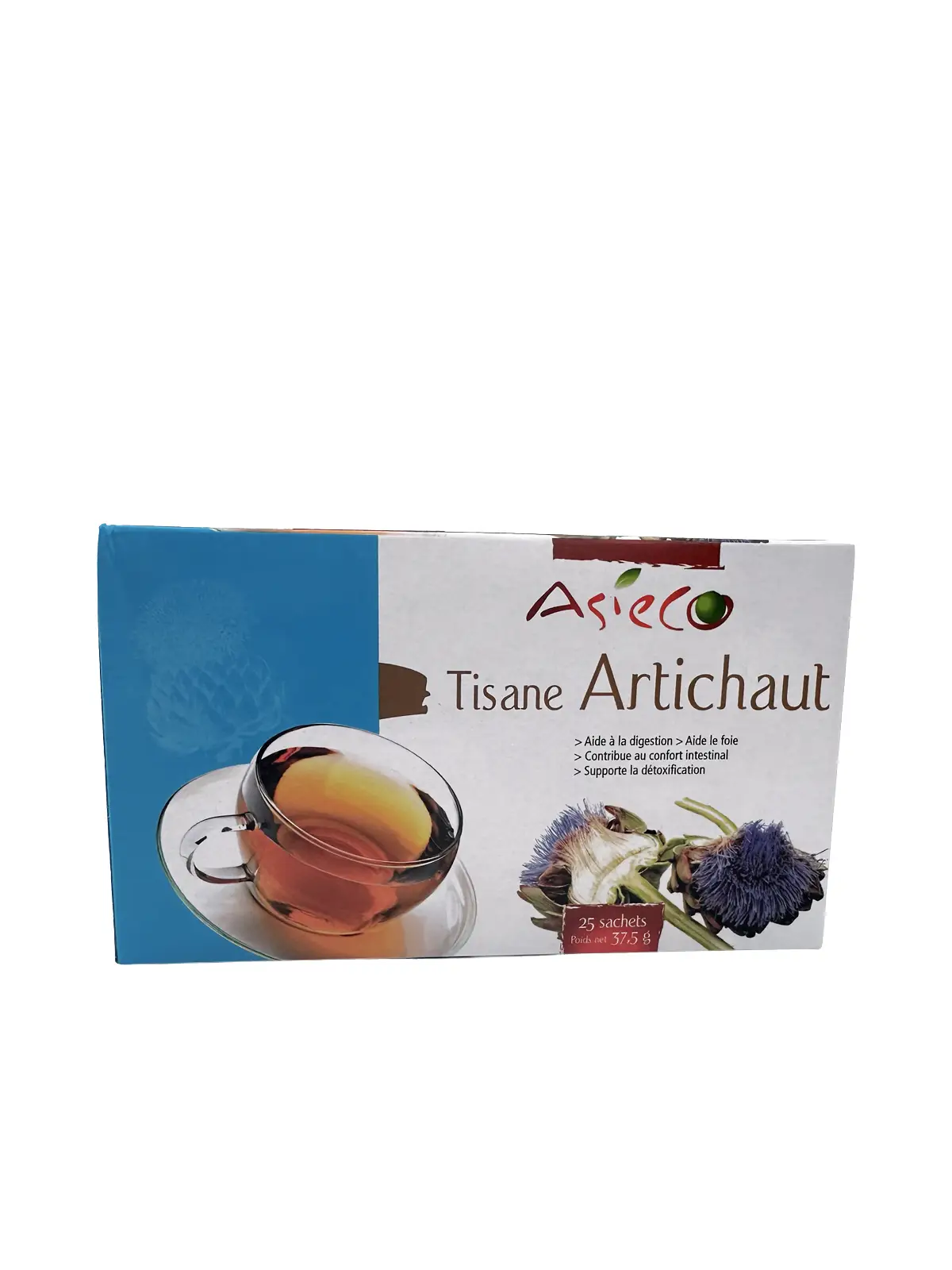
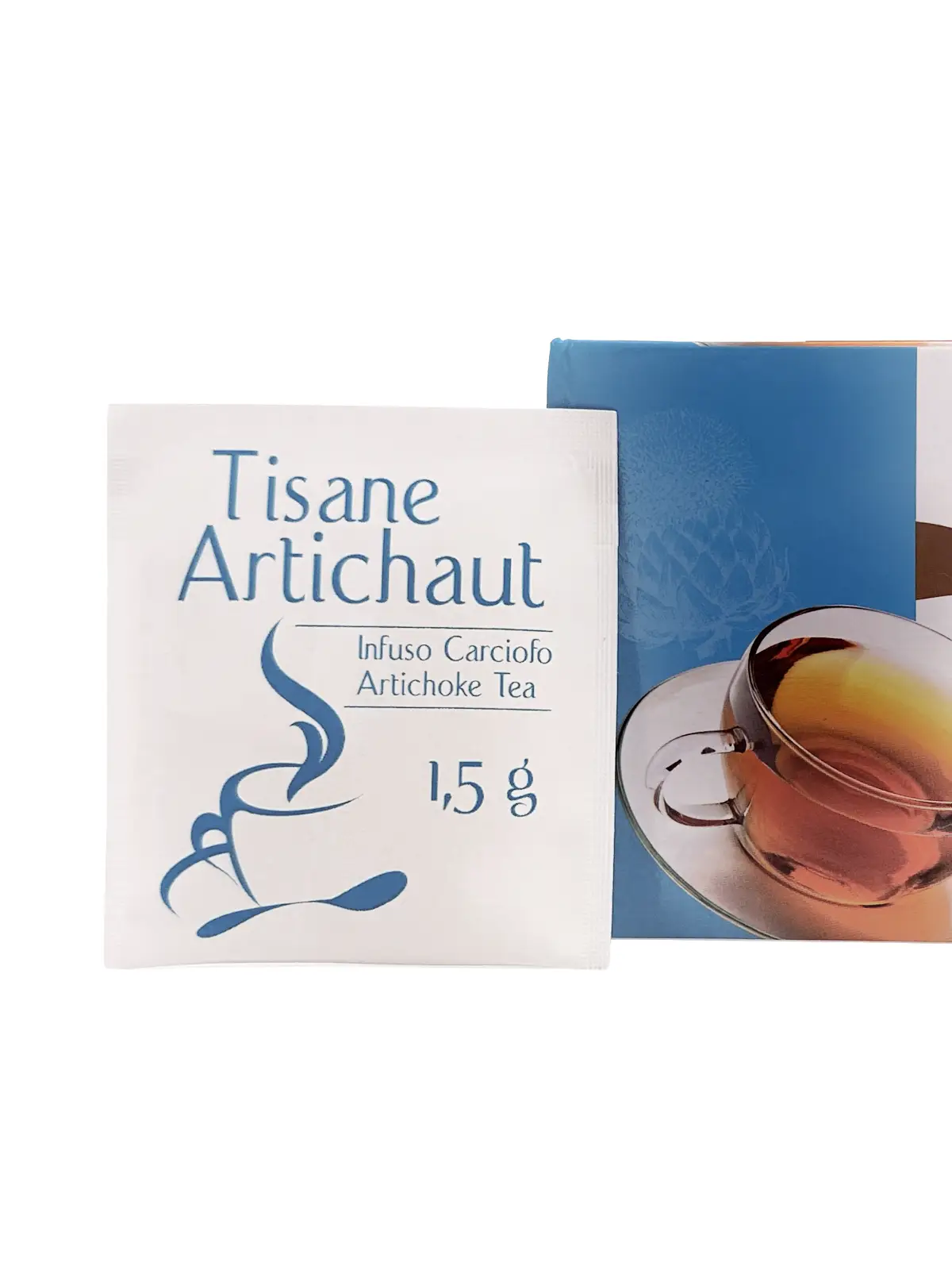
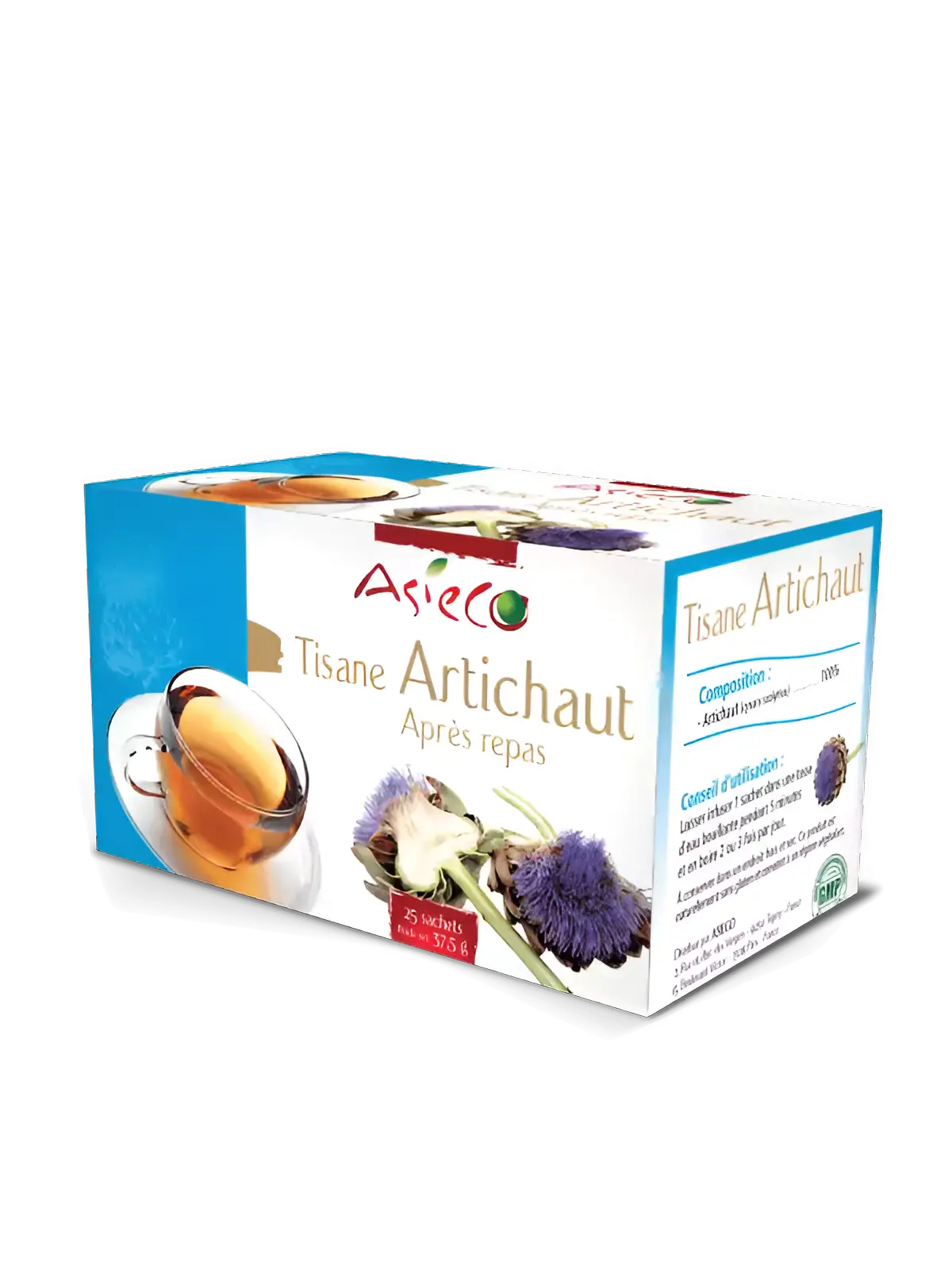
| Packaging | 25 packets of 1.5 g , 37.5 g net |
| Certification | ISO 22000-2005 |
The artichoke (Cynara scolymus) is a plant of the Asteraceae family, cultivated and valued since ancient times in the Mediterranean basin and Asia. In traditional European herbal medicine, the artichoke leaf is recognized for its role in supporting healthy digestive function, particularly in the liver and gallbladder.
This herbal tea is made exclusively from dried artichoke stems, roots, and leaves, with no additives, no added flavors, and no preservatives. It is certified to ISO 22000-2005, the international standard for food safety.
This product is a food item. It is not a substitute for medical treatment or a varied and balanced diet.
2 to 3 cups per day, preferably after meals.
Bring 1 liter of water to a boil, add 2 to 3 tea bags, let steep, then let cool. Store in the refrigerator and consume within 24 hours.
Store away from heat, moisture, and direct light. Keep out of reach of children. Best consumed before the date indicated on the package.
Not recommended for individuals with allergies to plants in the Asteraceae family (chamomile, chrysanthemum, daisy, etc.).
If in doubt, or if you have a known liver or biliary condition, consult a healthcare professional before use.