0
- On sale!



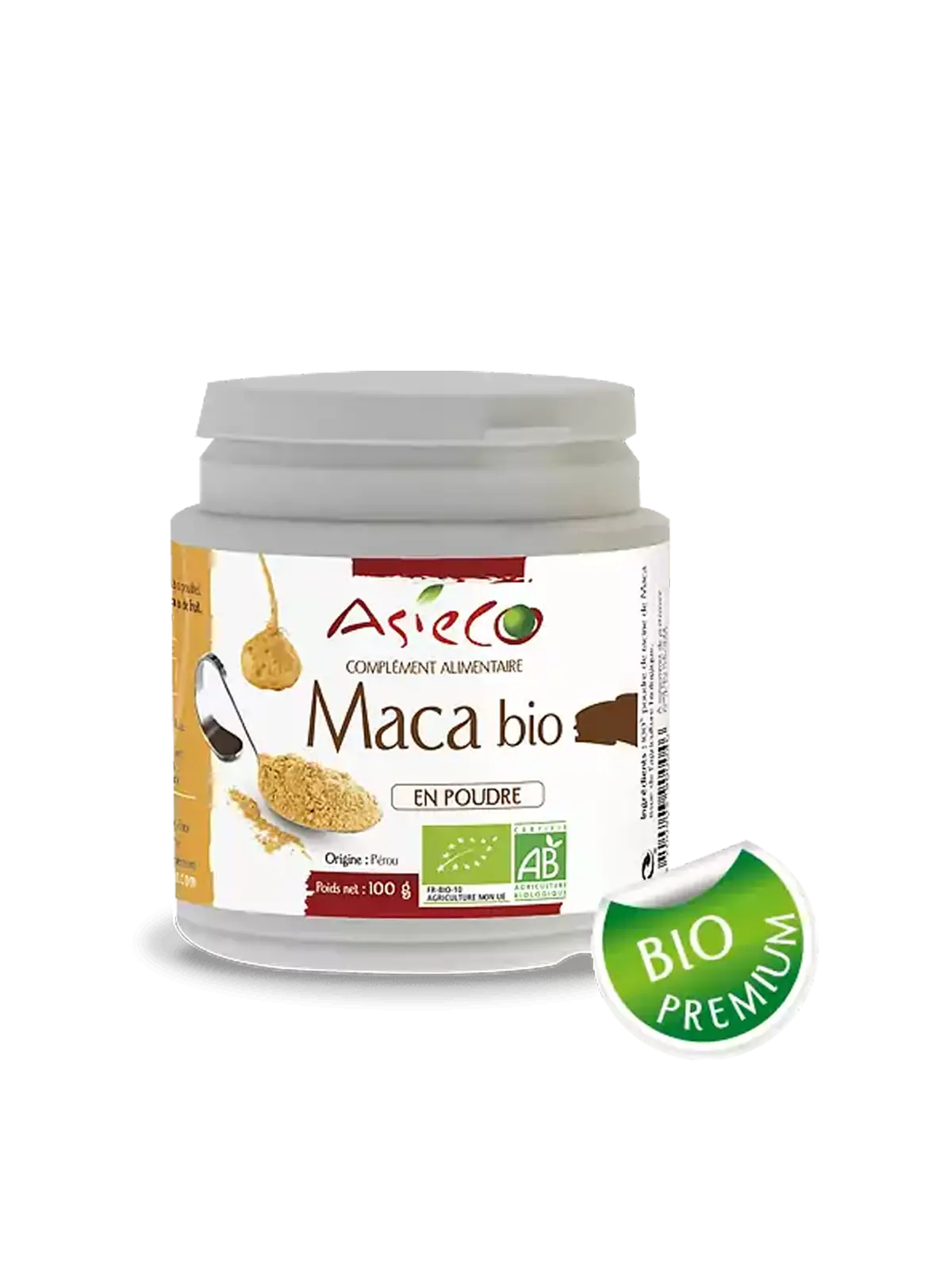
An Andean tuber grown at an altitude of 4,200 m, certified organic and Fair For Life.
Maca is a tuber native to the high Andean plateaus of Peru, cultivated for millennia in the extreme climatic conditions of the Andes mountain range. This powder is made from a natural blend of ecotypes, harvested and dried using traditional methods on the Junín Plateau at an altitude of 4,200 meters.
Dietary supplement. This product is not intended to replace a varied, balanced diet and a healthy lifestyle.
ASIECO Organic Maca – Natural Energy from the Andes
Native to the highlands of Peru, Maca—also known as Lepidium meyenii—is a plant traditionally recognized for supporting vitality, endurance, and overall well-being.
ASIECO selects organic Maca root powder, made from dried roots that are then finely ground, to naturally preserve its nutritional qualities.
The Benefits of ASIECO Organic Maca
Energy and Vitality
Maca helps maintain energy and vitality on a daily basis. It is ideal for managing periods of temporary fatigue, busy days, or changes in routine.
Physical and Mental Performance
Maca supports physical and mental performance. It’s perfect for active individuals, athletes, students, or anyone looking to boost their natural energy levels.
Sexual Vitality
Traditionally used in the Andes, Maca supports sexual vitality in both men and women. It helps maintain intimate well-being and overall balance.
ASIECO Quality
100% organic Maca root
Origin: Peru
No additives
No preservatives
Fine powder that’s easy to incorporate into your diet
Quality controlled in accordance with European standards
| Scientific name | Lepidium meyenii Walp. (syn. Lepidium peruvianum) |
|---|---|
| Common names | Maca, Peruvian maca, Peruvian ginseng |
| Botanical family | Brassicaceae, same family as cabbage and watercress |
| Part used | Dried hypocotyl (tuberous root), ground into powder |
| Composition | 100% organic maca root powder (Lepidium meyenii), a blend of natural ecotypes (approx. 40% red, 40% yellow, 20% others) |
| Certification | Organic farming, certified FR-BIO-10, Fair For Life (FFL) certified |
| Origin | Junín Plateau, Peru, elevation 4,200 m |
| Harvesting and Processing | Harvested, dried, and processed using traditional methods |
| Packaging | 100-gram jar or 1-kilogram bag |
| Daily serving | 1 level teaspoon, about 2 g |
ORGANIC MACA FROM THE JUNÍN HIGHLANDS (PERU)
Maca (Lepidium meyenii) is a tuber belonging to the Brassicaceae family, grown exclusively in the Andean highlands at altitudes between 3,800 and 4,500 meters, primarily in the Junín and Pasco regions of Peru. It is one of the very few edible plants capable of growing at such high altitudes, under extreme climatic conditions: nighttime frosts, intense ultraviolet radiation, strong winds, and poor volcanic soils.
Over the millennia, these conditions have shaped a plant that is particularly nutrient-dense. Since pre-Inca times, maca has been a traditional staple food for the peoples of the Andean highlands.
The powder sold by Asieco comes from the Junín Plateau, at an altitude of approximately 4,200 meters, considered the historic home of maca. It is certified organic according to the FR-BIO-10 standard and holds Fair For Life (FFL) certification, a fair trade label that guarantees production conditions that respect local producers, their rights, and the environment.
The powder offered is a natural blend of ecotypes, consisting of approximately 40% red maca, 40% yellow maca, and 20% other colors (pink, purple, marbled, gray, and black). This breakdown reflects the natural composition of the fields when the roots are not sorted by color. It corresponds to the majority of maca powders sold without specific ecotype selection.
Remarkable Nutritional Density
The maca root, once dried and ground into powder, has a nutritional profile that stands out compared to many other tubers. Available analyses indicate a protein content ranging from 10 to 14% of dry weight, including several essential amino acids.
Maca powder also contains complex carbohydrates, primarily in the form of starch, which constitute its main source of energy. It also provides dietary fiber that supports healthy digestive function, as well as several minerals: calcium, potassium, iron, magnesium, zinc, and manganese.
B vitamins (B1, B2, and B6) and vitamin C are also present. However, their levels may vary depending on growing conditions, the harvest period, and the drying process.
Glucosinolates and macamides: characteristic compounds
Like all members of the Brassicaceae family, maca contains glucosinolates—sulfur-containing compounds also found in broccoli, cabbage, and watercress. These substances are the subject of numerous phytochemical studies due to their biological properties.
Maca also contains macamides, macaridines, and other compounds specific to the genus Lepidium, which serve as characteristic chemical markers of this plant. These molecules are attracting growing scientific interest, although no definitive clinical conclusions have yet been established at the European regulatory level.
A traditional food of the Andean peoples
The cultivation of maca in the Andean highlands has been documented for over 2,000 years—and likely much longer. Sixteenth-century Spanish chroniclers report that the conquistadors, faced with the difficulties their horses encountered at high altitudes, adopted the local practice of feeding them maca. They then observed an improvement in the horses’ vigor and reproductive capacity.
This historical anecdote, frequently cited in the literature on maca, attests to the plant’s importance in Andean traditions. However, it does not constitute scientific proof of its effects in humans.
Maca Ecotypes: Natural Diversity
Maca exists in several ecotypes, primarily distinguished by the color of their hypocotyl: yellow, red, black, pink, purple, or marbled. These different colors correspond to slightly distinct phytochemical profiles, particularly in terms of glucosinolates and, for certain colored varieties, anthocyanins.
Black maca, for example, is the subject of specific research due to its unique composition. The natural blend offered by Asieco reflects the true diversity of the traditional fields on the Junín Plateau and provides a profile representative of all the ecotypes cultivated in this historic region.
Dietary supplement. Do not exceed the recommended daily dose. This product is not a substitute for a varied, balanced diet and a healthy lifestyle.
1 level teaspoon per day, or about 2 g of powder. Do not exceed this daily dose. Maca powder has a distinctive taste—slightly malty and caramel-like, with an earthy note. Start with half a teaspoon for the first few days to allow your body to adjust gradually, especially if you have a sensitive digestive system.
Maca powder mixes easily into cold or lukewarm beverages. Its malty, slightly sweet flavor pairs well with:
Maca powder can withstand cooking, unlike some supplements that are more sensitive to heat. It can therefore be incorporated into baked goods without significant loss of nutritional value, as glucosinolates and macamides are relatively stable at moderate heat.
Store away from heat, moisture, and direct light in an airtight container once opened. Keep out of reach of children. Best consumed before the date indicated on the package.
Not recommended for people with thyroid disorders due to the presence of glucosinolates, which may interfere with thyroid function at high doses. Not recommended for pregnant or breastfeeding women due to insufficient clinical data on safety in these situations. If you are currently undergoing hormone therapy, consult a healthcare professional before regular use. Does not contain caffeine.