0
- On sale!
- -€35.00



Ginger (Zingiber officinale) has an EMA/HMPC monograph recognizing its traditional uses, as well as health claims evaluated by the EFSA. The properties presented below are based on these references. They apply to ginger as a plant and are associated with minimum daily doses that must be taken into account.
Ginger is one of the plants with the longest and most extensively documented history of use for digestive purposes in global herbal medicine traditions. In traditional Chinese and Indian (Ayurvedic) medicine, as well as in medieval European pharmacopoeias, it is consistently associated with supporting gastric comfort, aiding digestion, and reducing feelings of discomfort after meals. Its main active compounds—gingerols, found in the fresh rhizome, and shogaols, which form during drying or cooking—are studied for their effects on gastric motility.
EFSA has issued a positive assessment of the health claim regarding ginger and the prevention of nausea, particularly that associated with motion sickness. This claim is contingent on a minimum intake of 1 to 2 g of ginger per serving, which is equivalent to approximately 2 to 3 pieces of candied ginger, depending on their size. Thanks to its convenience and ready-to-eat format, candied ginger is a particularly suitable way to consume ginger while on the go.
Ginger’s characteristic spiciness comes from gingerols, phenolic compounds specific to Zingiber officinale. During the candying process, some of the gingerols are converted into shogaols, slightly different derivatives that produce a distinct heat—more persistent but less intense. This partial transformation explains the distinctive flavor profile of candied ginger: less intense than fresh ginger, with a mild warmth that builds gradually. Gingerols and shogaols are the subject of extensive scientific literature due to their antioxidant and carminative properties.
Ginger is one of the most widely consumed spices in the world, having been a staple in Asian, African, Caribbean, and European cuisines for centuries. Its candied form is particularly popular in British pastries and confectionery (the famous ginger biscuit), in Cantonese cuisine, and as a snack in many Asian cultures, where it is eaten at the end of a meal for its recognized digestive properties.
The claim regarding the prevention of motion sickness is contingent upon a minimum dose of ginger per serving. The other information is based on documented traditional uses and the available scientific literature. It does not constitute additional health claims within the meaning of Regulation (EC) No. 1924/2006.
| Scientific name | Zingiber officinale Roscoe |
|---|---|
| Common names | Ginger, medicinal ginger |
| Botanical family | Zingiberaceae |
| Part used | Rhizome (underground stem) candied with cane sugar |
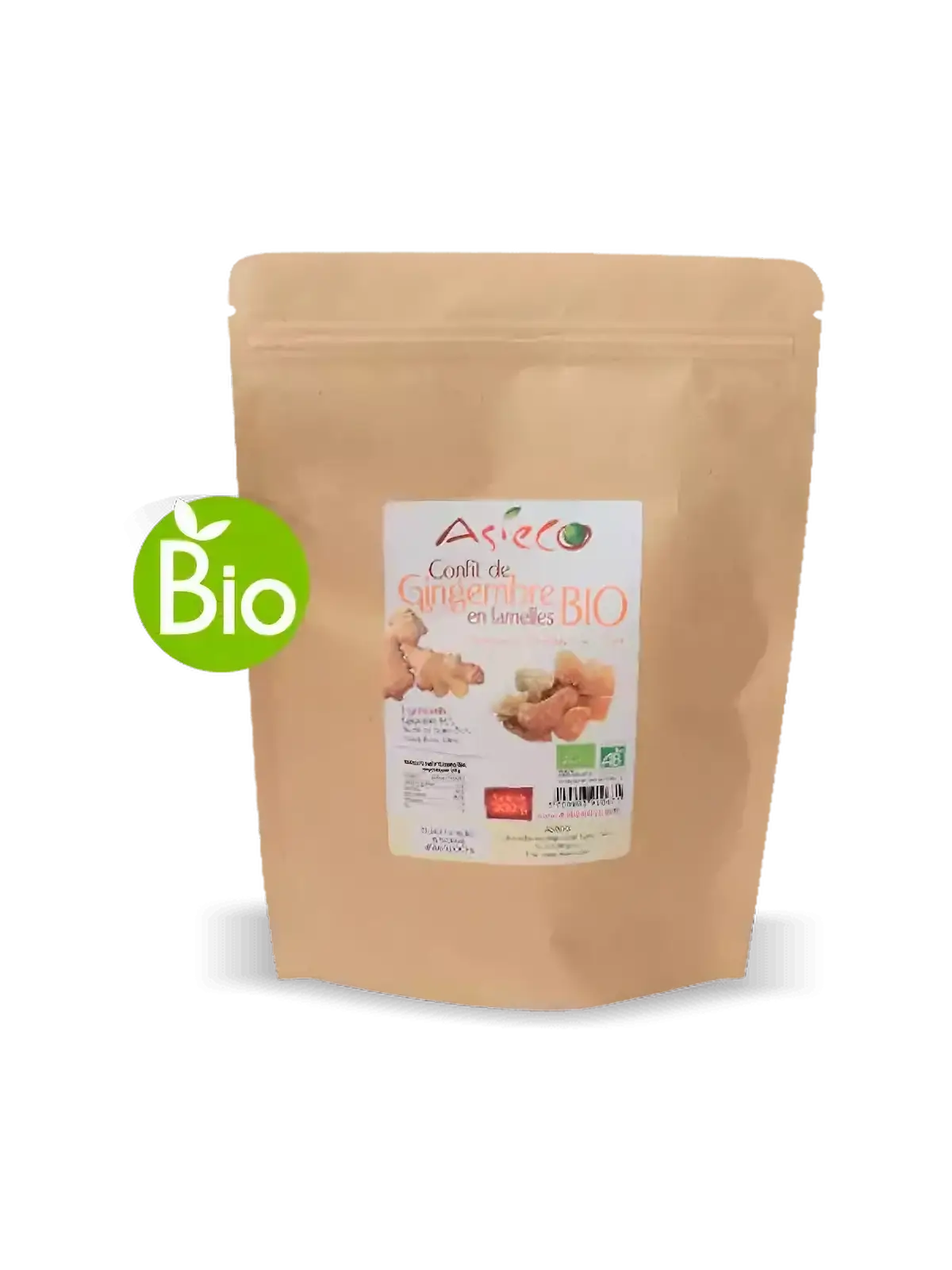
| Composition | Organic ginger (Zingiber officinale) 65%, organic cane sugar 35% |
| Certification | Organic farming |
| Origin | China |
| Format | Candied rhizome pieces, ready to eat |
| Packaging | 200-gram bag |
Ginger is the rhizome of a tropical perennial plant native to Southeast Asia, cultivated for millennia in India, China, and throughout the Indo-Pacific region. Its rhizome—the underground part shaped like knotted hands—contains the aromatic and active compounds that give it its characteristic flavor: warm, spicy, and slightly lemony, with a lingering warmth on the finish due to the presence of gingerols and shogaols, its specific phenolic compounds.
The candying process involves immersing pieces of fresh rhizome in a cane sugar syrup, which tempers ginger’s natural pungency while preserving its texture and much of its aroma. The result is a slightly soft product whose spicy warmth gradually comes through at the end of the tasting experience. Made exclusively from organic ginger and organic cane sugar, this candied ginger contains no added colors or preservatives.
This product is a sweetened food item. Consume as part of a varied and balanced diet. The sugar content should be taken into account as part of a specific diet.
Ginger confit can be eaten directly, in pieces, as a snack or at the end of a meal. Its sweetness combined with ginger’s natural spiciness makes it a popular treat after hearty meals or on the go. Recommended intake: 3 to 5 g per day to benefit from ginger’s properties.
Ginger confit can easily be incorporated into many culinary and baking recipes.
2 to 3 pieces of confit can be dissolved in a cup of hot water to make a slightly sweet ginger drink, with no additional preparation needed. A slice of lemon and a little honey nicely complement this improvised tea.
Store away from heat and moisture, in a cool, dry place; ideally in an airtight container once opened. Sugar acts as a natural preservative. Keep out of reach of children. Best consumed before the date indicated on the package.
Contains cane sugar: consume in moderation as part of a low-sugar diet or if you have diabetes. Not recommended for individuals with gallstones without prior medical advice. Pregnant women should consume in moderation, not exceeding typical dietary amounts.
If you are currently taking anticoagulant medication, consult a healthcare professional, as potential interactions with ginger at high doses have been documented in the literature.